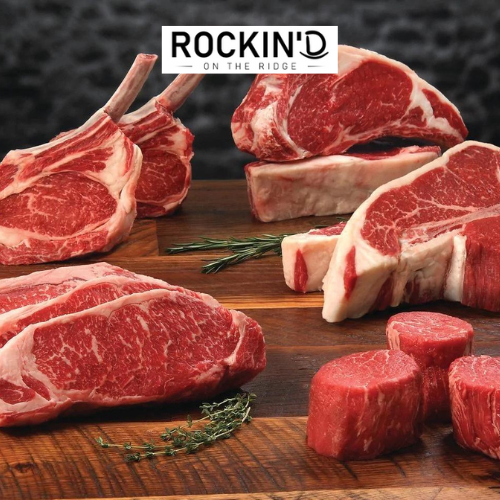


Put a ribeye in front of a table of steak lovers, and the debate ends before it starts. This is the cut steakhouses build their reputations on and the one home cooks reserve for the nights that matter rich marbling, a buttery finish, and a flavor no other steak quite matches. But not every ribeye earns that reputation. The difference between a forgettable steak and the one your guests are still talking about next week comes down to two things: what you buy, and how you cook it. We can tell you exactly how to get both right.
We're Rockin' D on the Ridge, a sixth-generation family farm in La Harpe, Illinois. Cassandra and her husband, Royce, run the operation alongside her father, Alan, and their sons, Brexton and Dalton, who are out feeding cattle most mornings the same way Cassandra's grandfather, Duane, raised beef before her. If you've ever stood in a grocery aisle wondering what's actually behind the label on your steak, that's exactly why we ship ours straight from our pasture to your door instead. Here's how to choose the right cut, how ribeye stacks up against a New York strip or filet mignon, how to read a USDA grade, and three methods for a perfect medium-rare.
What Is a Ribeye Steak?
A ribeye comes from the rib primal ribs six through twelve along the animal's upper back. These muscles do little work, so the meat stays tender and develops heavy marbling: the web of fat that melts as the steak cooks, basting it from the inside. Angus cattle marble exceptionally well, which is why USDA grading is based largely on it.
Slice a standing rib roast into individual steaks and you get ribeyes. Each has two parts: the large "eye" of muscle, and the ribeye cap (spinalis) , the crescent many chefs call the most flavorful bite on the animal.
Boneless, Bone-In, Cowboy, or Tomahawk?
|
Cut |
Bone |
Thickness |
Best For |
|
Boneless ribeye |
None |
Any |
Weeknight dinners, fast even cooking |
|
Bone-in ribeye |
Standard rib bone |
Any |
Classic steakhouse presentation |
|
Cowboy ribeye |
Short, trimmed bone |
1.5–2 in |
One big appetite, or two to share |
|
Tomahawk ribeye |
Full, cleaned bone |
2+ in |
Holiday centerpiece, dramatic reveal |
A boneless ribeye steak cooks fast and carves clean, with no bone to work around the right call for a weeknight dinner done well. A cowboy ribeye steak satisfies one serious appetite or two people happy to share. A tomahawk ribeye steak is the showpiece: save it for the holiday table or the dinner you want people remembering. The bone itself adds little flavor that comes almost entirely from fat and marbling but it insulates the meat nearest it, keeping that section a touch juicier. Prioritize grade and marbling first; choose bone-in or boneless based on the presentation you're after.
Ribeye vs. New York Strip vs. Filet Mignon
|
Ribeye |
New York Strip |
Filet Mignon |
|
|
Cut from |
Rib primal |
Short loin |
Tenderloin |
|
Marbling |
High |
Moderate |
Low |
|
Tenderness |
Very tender |
Firm chew |
Most tender |
|
Flavor |
Richest, buttery |
Bold, beefy |
Mild, delicate |
|
Price/lb |
Moderate–premium |
Moderate |
Highest |
The strip is leaner, with a tighter grain and a firmer bite; ribeye's marbling makes it richer and far more forgiving of extra heat. Filet mignon, from the barely-worked tenderloin, is the most tender cut on the list and the mildest it leans on butter or sauce to make up for what it lacks in fat. For flavor, juiciness, and forgiveness on the grill, ribeye wins outright.
Choosing a Good One
- Marbling: fine, even white flecks through the eye and cap
- Thickness: at least 1 inch, ideally 1.25–2 inches
- Color: bright cherry red (vacuum-sealed beef darkens until exposed to air)
- Fat cap: creamy white, trimmed to about ¼ inch
- Packaging: tight vacuum seal, minimal liquid in the bag
USDA grades break down clearly: Prime (abundant marbling, the richest steak you can buy) outranks Choice (moderate marbling, the most widely available, and a great grilling choice), which outranks Select (leaner and less forgiving). But grade is only part of the story: breeding, raising, and handling shape the final steak just as much. That's the standard we hold ourselves to at Rockin' D on the Ridge: BQA-certified humane handling and a herd we've raised ourselves, on our own ground in La Harpe, Illinois, for six generations running.
Shop our full ribeye steak collection, including boneless ribeye steak, cowboy ribeye steak, and tomahawk ribeye steak cuts from our pasture-raised Illinois Angus herd.
How to Cook It: 3 Methods
Pull the steak from the fridge 30–45 minutes ahead, pat it dry, and season with kosher salt and pepper (salt up to 24 hours ahead for a better crust). Use a thermometer every time.
- Pan-seared (1–1.5 in): Sear in smoking-hot cast iron, 2–3 min/side. Add butter, garlic, herbs; baste 1–2 minutes. Pull at 125–130°F.
- Grilled: Two-zone fire, 450–500°F for searing, cooler side for flare-ups. Flip once.
- Reverse sear (1.5 in+; our go-to for cowboy and tomahawk cuts): Roast at 250°F to 10–15°F below target, then sear 60–90 sec/side in a hot pan.
|
Thickness |
Rare |
Medium-Rare |
Medium |
|
1 in |
3–4 min/side |
4–5 min/side |
5–6 min/side |
|
1.25 in |
4–5 min/side |
5–6 min/side |
6–7 min/side |
|
1.5 in |
5–6 min/side |
6–7 min/side |
7–8 min/side |
|
Doneness |
Pull At |
Final Temp |
|
Rare |
115–120°F |
125°F |
|
Medium-Rare |
125–130°F |
135°F |
|
Medium |
135–140°F |
145°F |
|
Medium-Well |
145–150°F |
155°F |
|
Well-Done |
155–160°F |
160°F+ |
USDA's safe minimum for whole cuts is 145°F with a 3-minute rest, a solid baseline for children, older adults, pregnant women, and anyone immunocompromised.
5 Mistakes to Skip
- Cooking it cold rest 30–45 min at room temp first
- Skipping the thermometer
- Starting wet in a lukewarm pan
- Pressing and poking the crust
- Slicing too soon rest 5–10 min first
Pairings
Comfort: mashed potatoes, creamed spinach, sautéed mushrooms · Bright: roasted asparagus, wedge salad, charred broccolini · Sauces: chimichurri, béarnaise, blue cheese butter · Drinks: Cabernet, Malbec, or a stout
Frequently Asked Questions
1. Which cut of steak is better, sirloin or ribeye?
Neither is universally better. Ribeye is richer, more heavily marbled, and prized for juicy, buttery flavor. Sirloin is leaner, firmer, and usually more budget-friendly. Rockin’ on the Ridge favors ribeye for bold flavor and grill-friendliness, while lean cuts suit lighter preferences.
2. What is the 3-3-3 rule for cooking ribeye steak?
The 3-3-3 rule is a simple steak-timing guideline: sear a roughly 1-inch steak for 3 minutes on one side, 3 minutes on the other, then rest 3 minutes. Thickness and heat vary, so Rockin’ on the Ridge recommends using a thermometer.
3. Is a ribeye better, medium or medium rare?
For ribeye, medium-rare is generally the sweet spot, with medium also appealing to those wanting more doneness. Rockin’ on the Ridge says most ribeye fans choose between medium-rare and medium, allowing marbling to soften without drying out the steak. Always cook by temperature.
4. What steak is like a ribeye but cheaper?
Chuck eye steak is a budget alternative to ribeye. The U.S. beef industry’s Beef. It’s What’s For Dinner calls chuck eye a low-cost ribeye alternative and describes it as tender, savory, and suitable for grilling. It delivers similar beefy satisfaction at a lower price.
5. What is a poor man's steak called?
Chuck eye steak is commonly called the “poor man’s ribeye.” It comes from the chuck section near the rib primal and can offer strong beef flavor and useful marbling for less money. Beef. It’s What’s For Dinner identifies chuck eye as a low-cost ribeye alternative.
6. What is the unhealthiest cut of steak?
There is no official “unhealthiest” steak cut. However, ribeye is among the fattier choices because of its heavy marbling. The American Heart Association recommends leaner cuts such as sirloin, tenderloin, round, or flank when limiting saturated fat as part of a heart-healthy diet.
The Bottom Line
Visit Rockin' D on the Ridge to see how six generations of family farming shape every cut of Angus beef we ship nationwide.
Every great ribeye has a story behind it. Ours starts on a ridge in La Harpe, Illinois, where our Angus cattle are pasture-raised and grain-finished by the same family that's worked this ground for six generations, then shipped straight from our farm to your door with no middleman in between. Before you buy ribeye online anywhere, check for clear breed and raising information, vacuum-sealed packaging, real cold-chain shipping, and a company you can actually reach.
Start with quality beef. Season it well. Cook it to temperature. Rest it before you cut. Get those right, and the ribeye does the rest.
Browse our ribeye steak collection now to order boneless, cowboy, or tomahawk ribeye steak cuts, dry-aged and shipped fresh from our family-run Illinois ranch.
Rockin'd on the Ridge Inc
- Phone: +1 (217) 659-7832
- Email: rockindontheridge@gmail.com
- Address: 2751 N County Road 3000, La Harpe, IL 61450, US

