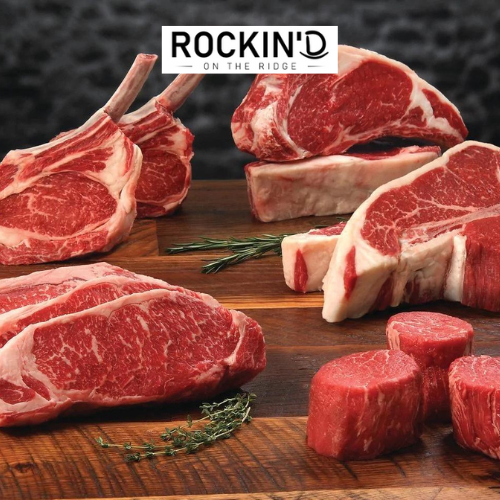


Few cuts turn a backyard cookout into an event like the tomahawk steak. With its long, frenched bone and marbled center, it's hard to ignore before the first bite is carved. But it isn't just for show cooked right, it delivers some of the most tender beef you'll find. This guide covers what it is, how it compares to other bone-in ribeye steak cuts, the best ways to cook one, and what to look for when buying.
The tomahawk steak has become the bone-in showstopper taking over backyard grills across the country, turning a simple cookout into a real event
What Is a Tomahawk Steak, Exactly?
A tomahawk steak is a bone-in ribeye steak with the entire rib bone left intact and frenched trimmed clean so it resembles an axe handle. The meat comes from the same rib primal as a standard ribeye, but the long bone and extra-thick cut push the total weight to 2–3 pounds or more. It's almost always cut a full two inches thick, which allows for slower cooking methods and an evenly cooked interior.
Where the Cut Comes From on the Cow
This cut comes from the rib primal, ribs six through twelve the same section as standard ribeye and prime rib. This area does little work on the animal, so it develops generous marbling, the fat behind a ribeye's rich flavor.
Tomahawk vs. Ribeye vs. Cowboy Steak | What's the Difference?
All three cuts come from the same rib primal, so the difference is the bone. A standard ribeye is boneless or trimmed close to the meat. A cowboy steak keeps a shorter, frenched bone. A tomahawk goes furthest, with the full-length bone left on for that signature handle. Whether you call it a tomahawk ribeye steak or simply a tomahawk, the flavor is nearly identical to a classic ribeye; the bone and thickness set it apart.
Why Tomahawk Steak Has Become the Cookout Centerpiece
Part of the appeal is marbling: the rib primal is one of the most consistently well-marbled sections of the cow, and that fat renders slowly to keep the meat juicy. The rest is theater. A two-inch-thick steak with a foot-long bone doesn't just taste good, it commands the table. Carving one at the table in front of guests has become part of the experience itself.
How Many People Does a Tomahawk Steak Feed?
A typical tomahawk weighs 2 to 3 pounds, including the bone, which is roughly half a pound to a pound of that total. After accounting for the bone, most tomahawks feed 2 to 4 people. For a dinner built around the steak alone, plan on one per two people; with a full spread of sides, one can stretch across three or four plates.
How to Cook a Tomahawk Steak Like a Pro
Because this cut is so much thicker than a standard steak, the most common mistake is cooking it like a regular one over high heat the whole way through, which chars the outside before the center reaches temperature.
The Reverse Sear Method (Best for a Cut This Thick)
A reverse sear tomahawk steak is widely considered the gold standard for this cut. Cook it low and slow around 225°F in an oven or over indirect grill heat until it's 10 to 15 degrees below your target temperature. Then finish with a hard, fast sear in a screaming-hot cast iron pan or over direct flame for a minute or two per side. This builds a deep crust without overcooking the meat around it.
Browse our collection of thick-cut, pasture-raised tomahawk steaks and order the bone-in showstopper that turns any backyard grill session into a real event
Cooking It Straight on the Grill
Prefer to stay outdoors? Set up a two-zone fire with direct and indirect heat. Sear briefly over direct flame for color, then finish over indirect heat, using a thermometer rather than time.
Oven-to-Cast-Iron Sear
No grill, no problem. Roast it on a wire rack in a low oven around 225–250°F until it nears your target temperature, then sear in a hot cast iron skillet for two to three minutes per side.
Internal Temperature Guide (Rare to Well-Done)
Pull the steak a few degrees before your target temperature, since carryover cooking will raise it slightly more while it rests.
- Rare: 120–125°F
- Medium-rare: 130–135°F
- Medium: 140–145°F
- Medium-well: 150–155°F
- Well-done: 160°F+
Most steakhouses recommend medium-rare, since the thickness holds a warm, red center without drying out the outer layers.
Seasoning and Resting: The Two Steps Most People Rush
A cut this good doesn't need much dressing up. A generous coating of kosher salt and cracked black pepper, applied at least 40 minutes ahead (or up to 24 hours as a dry brine), is usually enough. Resting matters just as much, let it sit 10 to 15 minutes before slicing so the juices redistribute.
Why a Pasture-Raised Tomahawk Cooks and Tastes Different
Not every tomahawk steak is equal, and the difference starts long before it reaches the grill. Cattle raised on open pasture, moving and grazing naturally, tend to develop more consistent marbling and cleaner flavor than beef finished quickly in crowded feedlots. At Rockin' Don the Ridge, the tomahawk steak has become the bone-in showstopper taking over backyard grills across the country this grilling season, and it starts with how our cattle are raised. Every tomahawk here is hand-cut a full two inches thick by our own butchers, not run through a machine built for thin, uniform grocery-case steaks.
Frequently Asked Questions
Is a tomahawk steak the same as a ribeye?
Yes. A tomahawk steak is a bone-in ribeye steak from the same rib primal as a standard ribeye, with the full rib bone left in and frenched. The meat is identical; the bone and thickness set it apart.
What temperature should I cook a tomahawk steak to?
Most tomahawk steaks are best pulled at 130–135°F for medium-rare. Confirm with a thermometer, not cook time alone, since thickness varies steak to steak.
How much does a tomahawk steak cost?
Because of its size and the labor of frenching the bone, a tomahawk steak costs more per pound than a standard ribeye. Pricing varies by weight, grade, and whether the beef is pasture-raised.
Can I cook a tomahawk steak entirely in the oven?
Yes. Roast it low and slow at 225–250°F until it nears your target temperature, then finish under the broiler or in a hot cast iron pan for a proper crust — a reverse sear adapted for indoors.
Why is a tomahawk steak so expensive?
The price reflects the cut and the labor: a tomahawk uses more of the rib bone, requires hand-trimming to french it properly, and is cut thicker than mass-produced steaks.
What's the best way to store or reheat a tomahawk steak?
Wrap leftovers tightly and refrigerate within two hours of cooking. To reheat without drying it out, warm gently in a low oven around 250°F until heated through, then sear briefly to restore the crust.
Where to Get a Tomahawk Steak Worth the Splurge
A tomahawk steak is an investment, worth buying from a source that treats it like one. Look for USDA Choice or Prime grading, a butcher who hand-cuts each steak instead of machine-portioning it, sources pasture-raised cattle, and ships with proper cold-chain packaging. Ready to plan your next cookout around one? Shop our hand-cut, pasture-raised tomahawk ribeye steaks online and bring home the bone-in showstopper your next backyard grill session deserves.
Rockin'd on the Ridge Inc
- Phone: +1 (217) 659-7832
- Email: rockindontheridge@gmail.com
- Address: 2751 N County Road 3000, La Harpe, IL 61450, US

